

Top :
Activités outdoor, Nature, Responsible travel, slowtourisme, Spring, Summer
5 unmissable castle walks between Alsace and Moselle
Fancy getting up a bit higher between Alsace and the Moselle? Medieval ruins, pink sandstone cliffs, dense forests and panoramic views stretching as far as the eye can see make up these routes, where every walk leads to a castle. From challenging routes for experienced walkers to family-friendly strolls, all you need to do is lace up your walking shoes.
The Medieval Walk: A Journey Through Five Castles
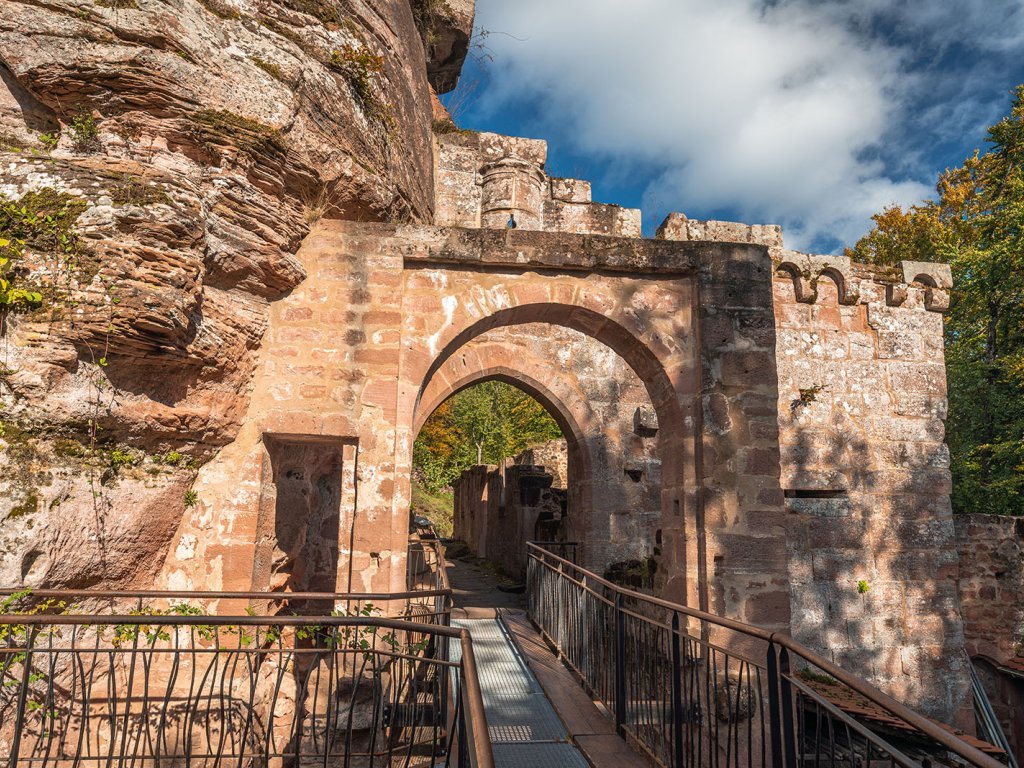
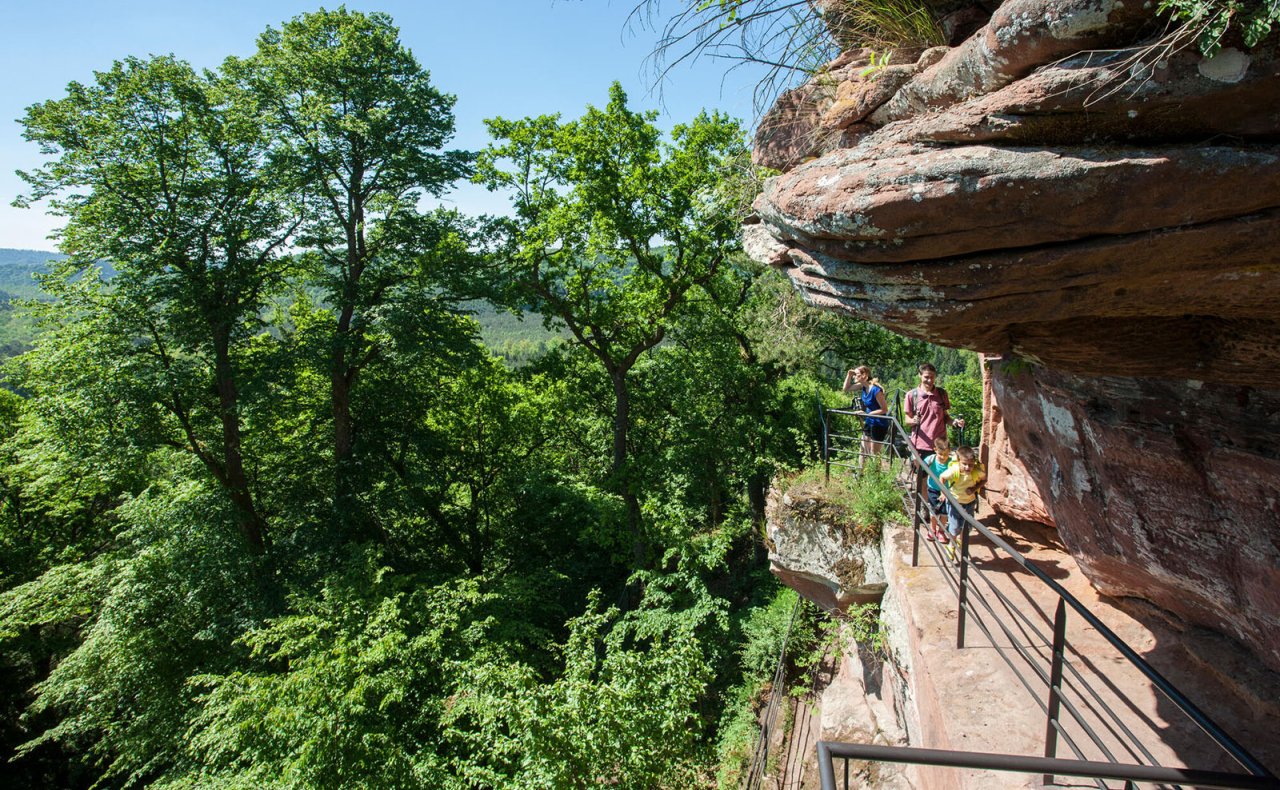
Five fortified castles in a single walk: it’s hard to imagine anything more spectacular in the Northern Vosges. From the very first few kilometres, the path winds its way through beech and pine trees before reaching the first ruins. With every ascent, a new fortress comes into view, towering above the forest. The Vieux-Windstein, the Nouveau-Windstein, the Schoeneck, the Wineck and the Wittschloessel follow one another over more than 17 kilometres against a backdrop of pink sandstone and wooded valleys.
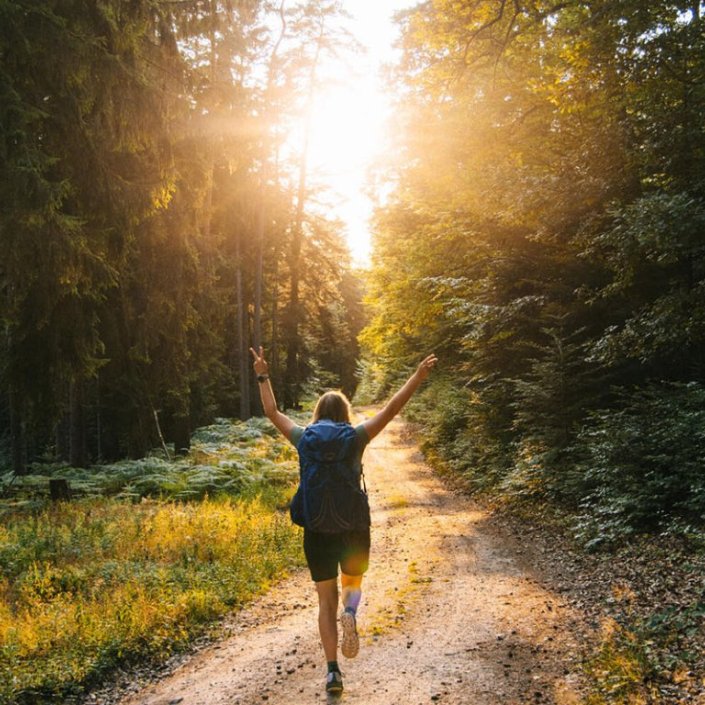
Throughout the route, the path alternates between sections through woodland, views over the Northern Vosges and visits to medieval ruins
Key highlight: five fortified castles in a single day’s walk.
Route: 17.2 km
Elevation gain: +709 m
Difficulty: Moderate to challenging
Duration: 5 hours
A more accessible alternative: the 4-castle trail
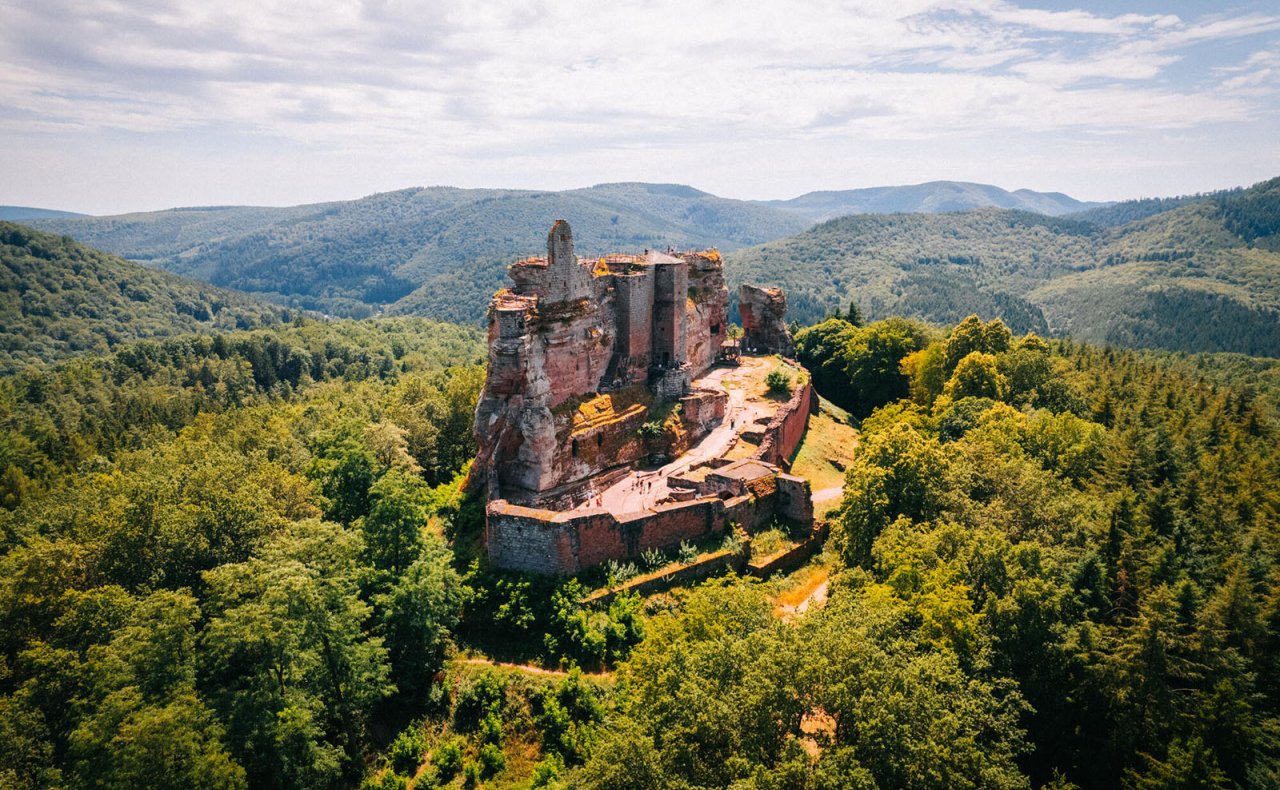
For a shorter route, opt for the 4 Castles Trail. Covering less than 7 kilometres, the trail crosses the North Vosges–Pfälzerwald Transboundary Biosphere Reserve, straddling the border between France and Germany.
Fleckenstein Castle makes a lasting impression with its silhouette clinging to a huge outcrop of pink sandstone. Families can extend the adventure with the ‘P’tit Fleck’ for younger children or the ‘Château des Défis’ for older ones. From the heights of Fleckenstein, the view opens out over the vast forests of the Northern Vosges, which stretch towards the German Palatinate. The route also takes you past the ruins of Loewenstein, Hohenbourg and Wegelnburg, three ancient fortified castles that overlook the surrounding forests from the heights of the massif.
Route length: 6.8 km
Elevation gain: +295 m
Difficulty: Moderate
Duration: 2 hours 30 minutes
Nature walk: Falkenstein & Waldeck
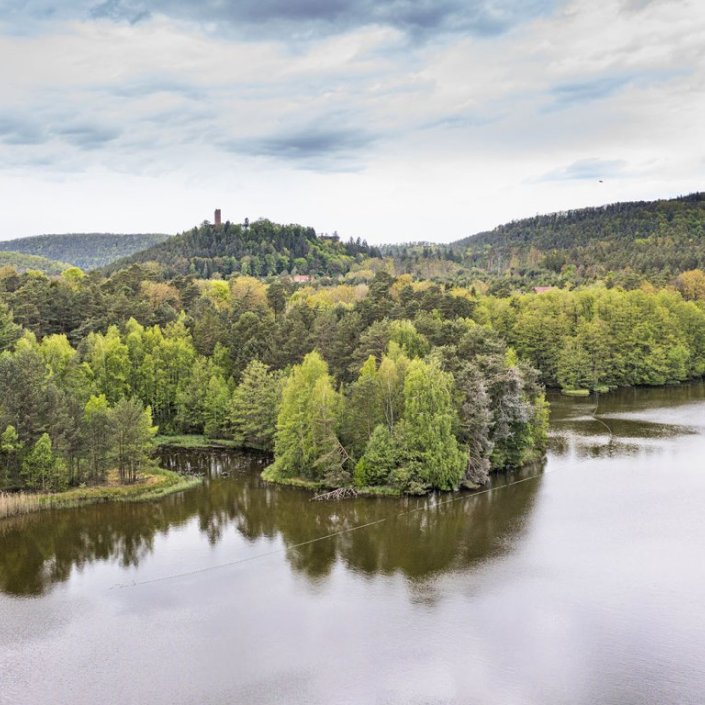
Water, woodland and rock take centre stage on this route through the Pays de Bitche. From Hanau Pond, the trail winds its way through the woodland before skirting Lieschbach Pond, in the heart of the Rochers et Tourbières Nature Reserve. Wetlands, sandstone outcrops and woodland landscapes punctuate the walk right up to the highest points of the route.
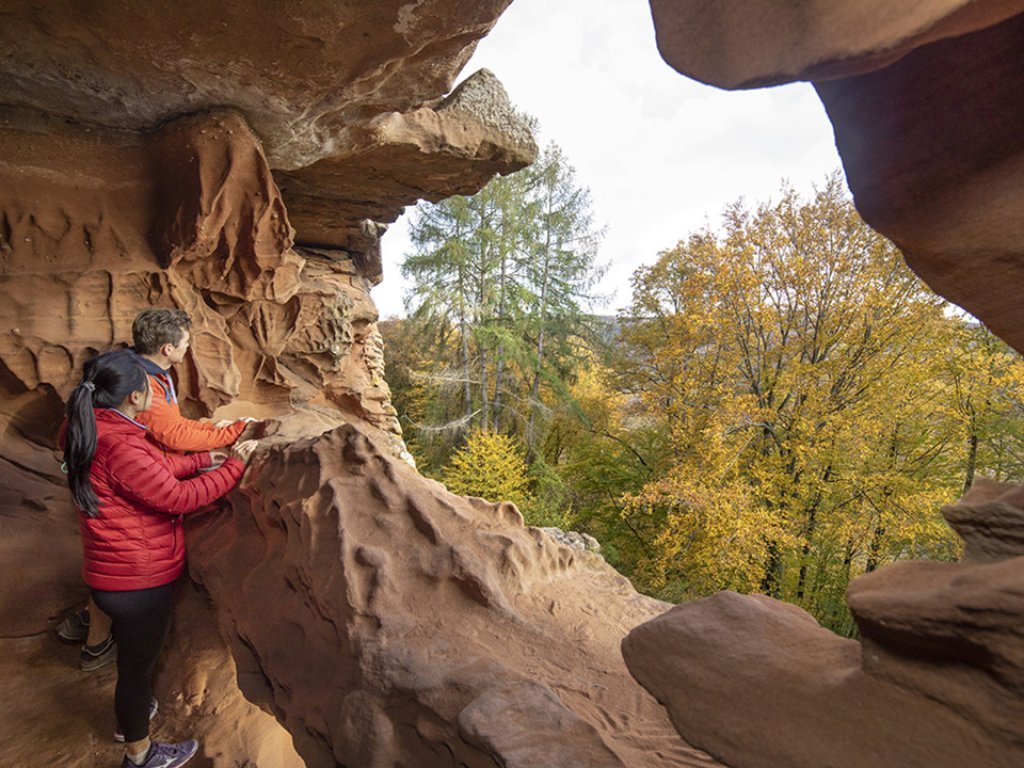
Falkenstein Castle towers above, offering a fine view of the surrounding forests. Further on, the ruins of Waldeck emerge from the vegetation. The impressive rock arch of the Erbsenfelsen, a refuge for the peregrine falcon, is one of the highlights of the walk.
A surprising fact: the Erbsenfelsen is home to one of the most iconic birds of the Northern Vosges, the peregrine falcon.
Route: 13.3 km
Elevation gain: +346 m
Difficulty: Intermediate
Duration: 4 hours 15 minutes
A gentler option: the Waldeck circular walk
Just a few kilometres are enough to soak up the atmosphere of the area. The Waldeck circular walk begins on the banks of Hanau Pond and then crosses the peat bog, where you’ll find sundews, a discreet carnivorous plant.
The path then leads to the ruins of Waldeck and passes an old boundary marker that once separated the County of Hanau from the Duchy of Lorraine.
Don’t miss: the Hanau peat bog, a rare natural habitat in the Grand Est region.
Route length: 6.5 km
Elevation gain: +120 m
Difficulty: Very easy
Duration: 2 hours
The Nideck to Schneeberg Trail
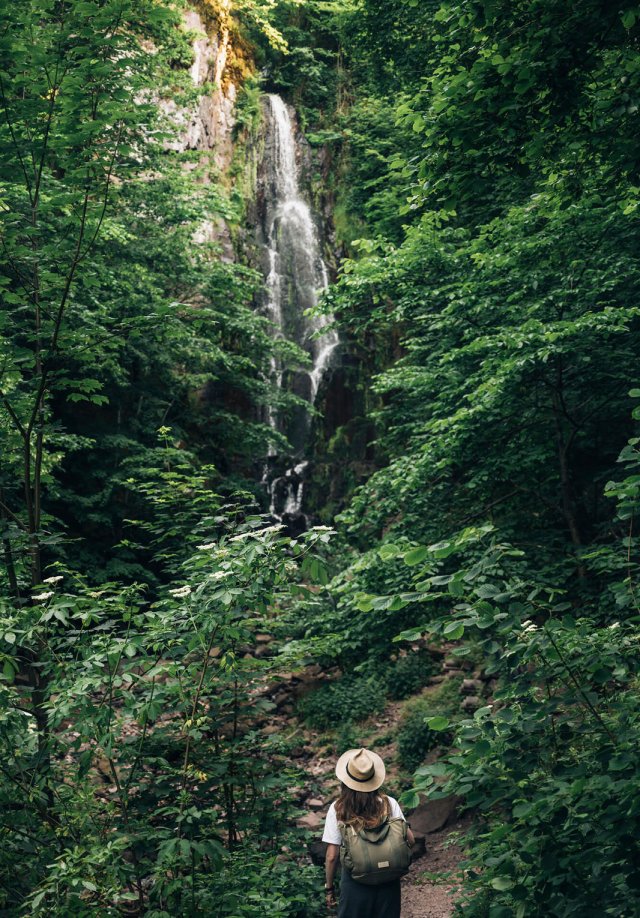
The walk begins with one of Alsace’s most famous natural spectacles. The Nideck waterfall bursts forth from the depths of the valley and plunges nearly 25 metres between moss-covered rocks and trees.
A few hairpin bends further up, the ruins of Nideck Castle overlook the Bruche Valley. The path then continues to climb up to the Schneeberg. At the summit, an orientation board helps you identify the peaks and forests stretching out all around.
The winning trio: waterfall, castle and panoramic summit.
13 km route
Elevation gain: +650 m
Difficulty: Intermediate
Duration: 4 hours 30 minutes
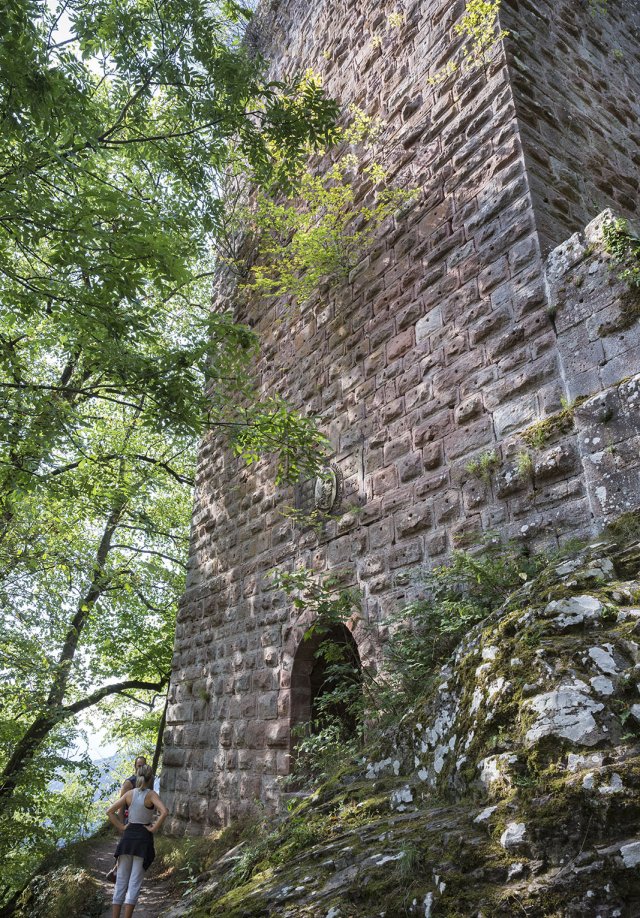
A family-friendly outing: In the footsteps of the Giants of Nideck
This walk allows you to get close to Alsace’s highest waterfall without having to set off on a long hike. The path winds through the forest to the site that inspired the legend of the Giants of Nideck. It is accessible with an all-terrain pushchair.
Those feeling more energetic can extend the walk to the ruins of Nideck Castle, which overlook the valley.
Tell me a story: the legend of the Giants of Nideck is one of Alsace’s great folk tales. You can download the story from the Molsheim-Mutzig Region Tourist Office website.
Route: 3.3 km
Elevation gain: +190 m
Difficulty: Easy
Duration: 1½ to 2 hours
The scenic walk: the castles of Saverne
This circular walk is ideal for walkers who enjoy long days out in the countryside. Accessible from Saverne railway station, it links several of the area’s most famous fortified castles.
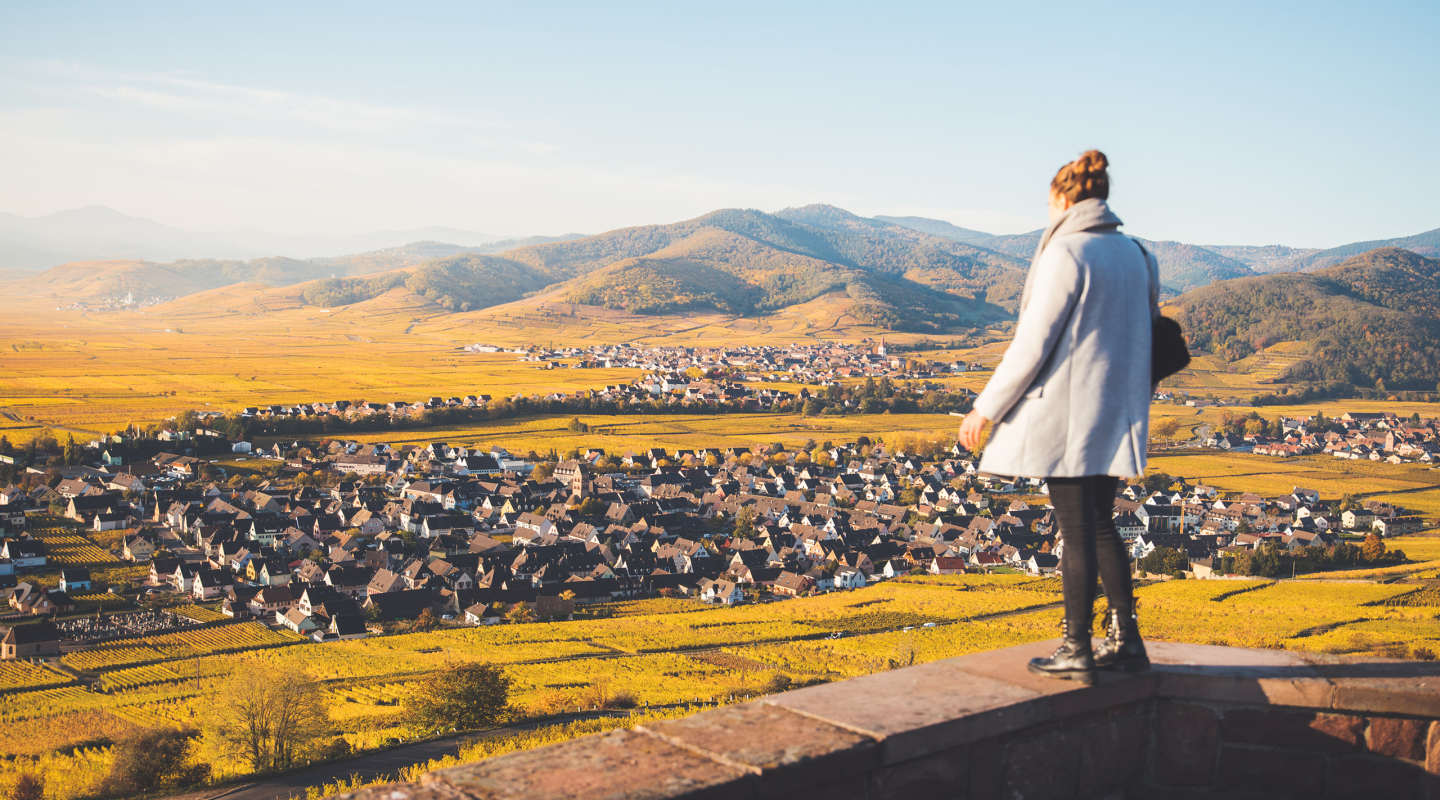
The Haut-Barr, the Ochsenstein and the Grand Géroldseck mark the route. You’ll discover these ruins perched high on the hills and recharge your batteries all along the route, right in the heart of the forest. Nicknamed ‘the Eye of Alsace’, the Haut-Barr offers one of the region’s most beautiful panoramic views of the Alsace plain.
You’ll never tire of it: there’s a succession of viewpoints almost all the way along the walk.
Route: 22.9 km
Elevation gain: +842 m
Difficulty: Moderate
Duration: 8 hours
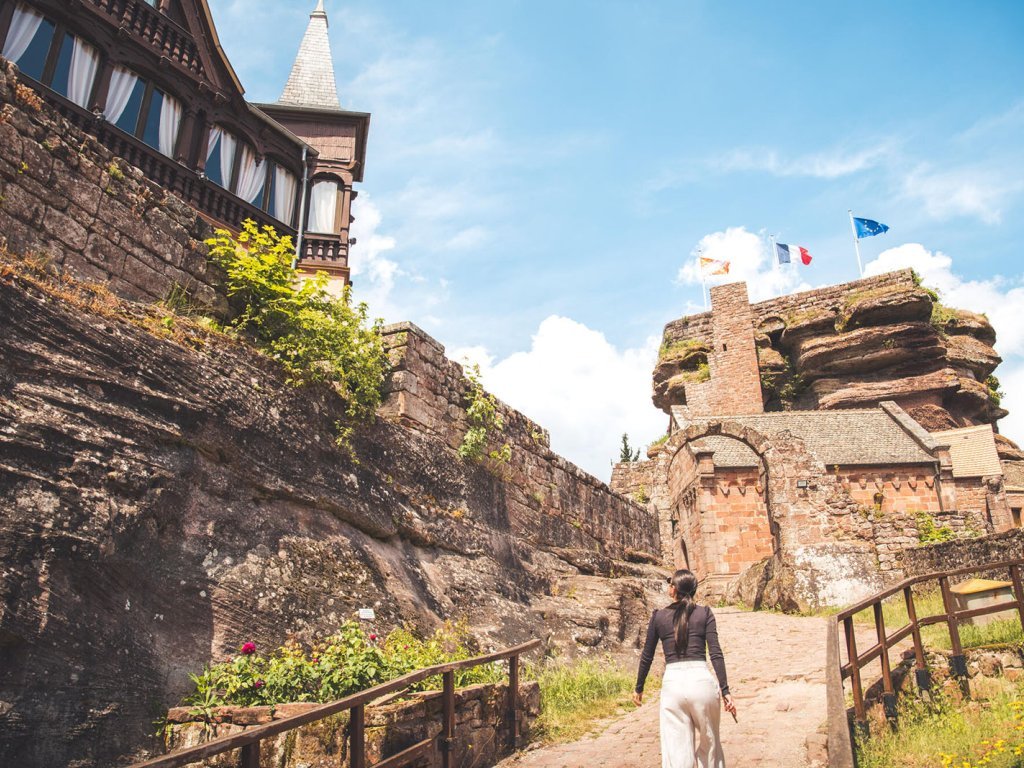
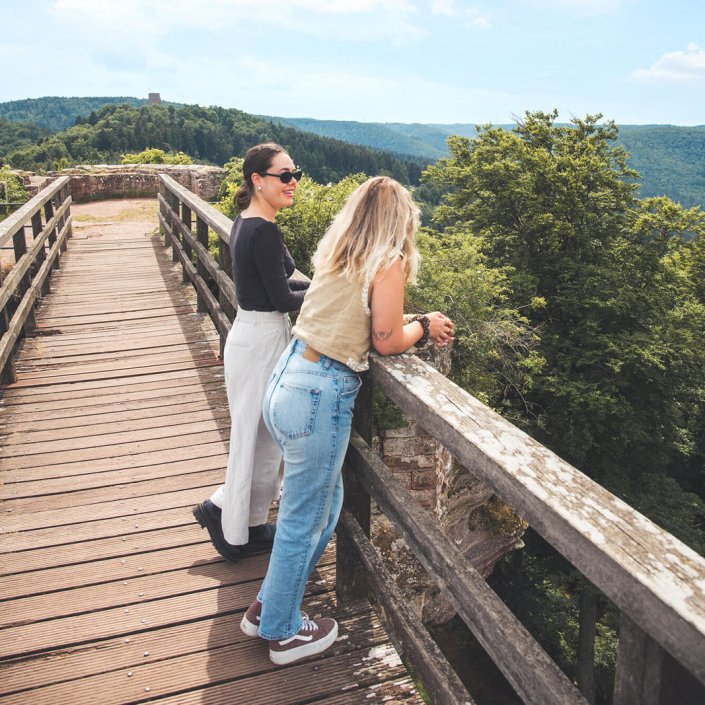
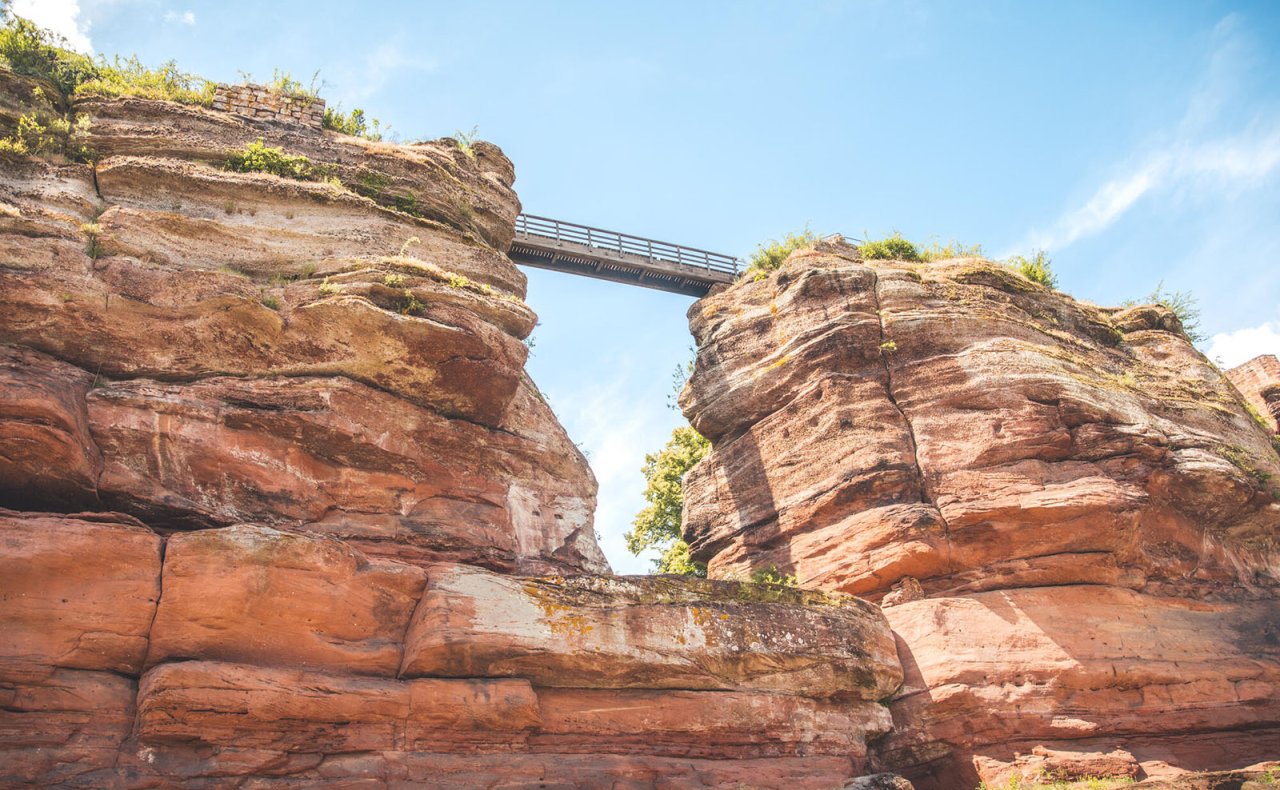
A shorter walk: Haut-Barr Castle
For those who simply want to enjoy the view, this easier route leads straight to Haut-Barr.
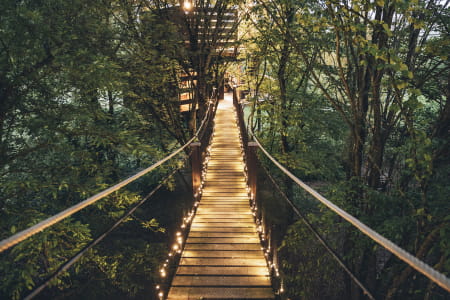
Once there, you’ll discover the castle ruins and its spectacular suspension bridge spanning two rocks. On a clear day, you can even see the spire of Strasbourg Cathedral on the horizon.
The photo spot: the Devil’s Bridge, suspended between the rocks of Haut-Barr.
Route: 8.6 km
Elevation gain: +277m
Difficulty: Easy
Duration: 2 hours 15 minutes
Hiking without borders: Weckersburg Castle
This walk follows the paths that naturally link France and Germany. Villages, forests and local heritage punctuate the route, in a little-known part of the Pays de Bitche. This circuit is one of the Pays de Bitche’s ‘Sentiers d’Excellence’.
After crossing the border, the route reaches the Hilstermühle in Germany, then follows the ‘Ruisseau sans frontière’ (Stream without Borders) trail before returning to the French side and passing close to Weckersburg Castle. The walk also runs alongside a pink sandstone cliff and offers beautiful views of the surrounding countryside.
An added bonus: you cross the border almost without realising it, whilst the forests stretch seamlessly on both sides.
Route length: 11.7 km
Elevation gain: +207 m
Difficulty: Easy
Duration: 3 hours 30 minutes
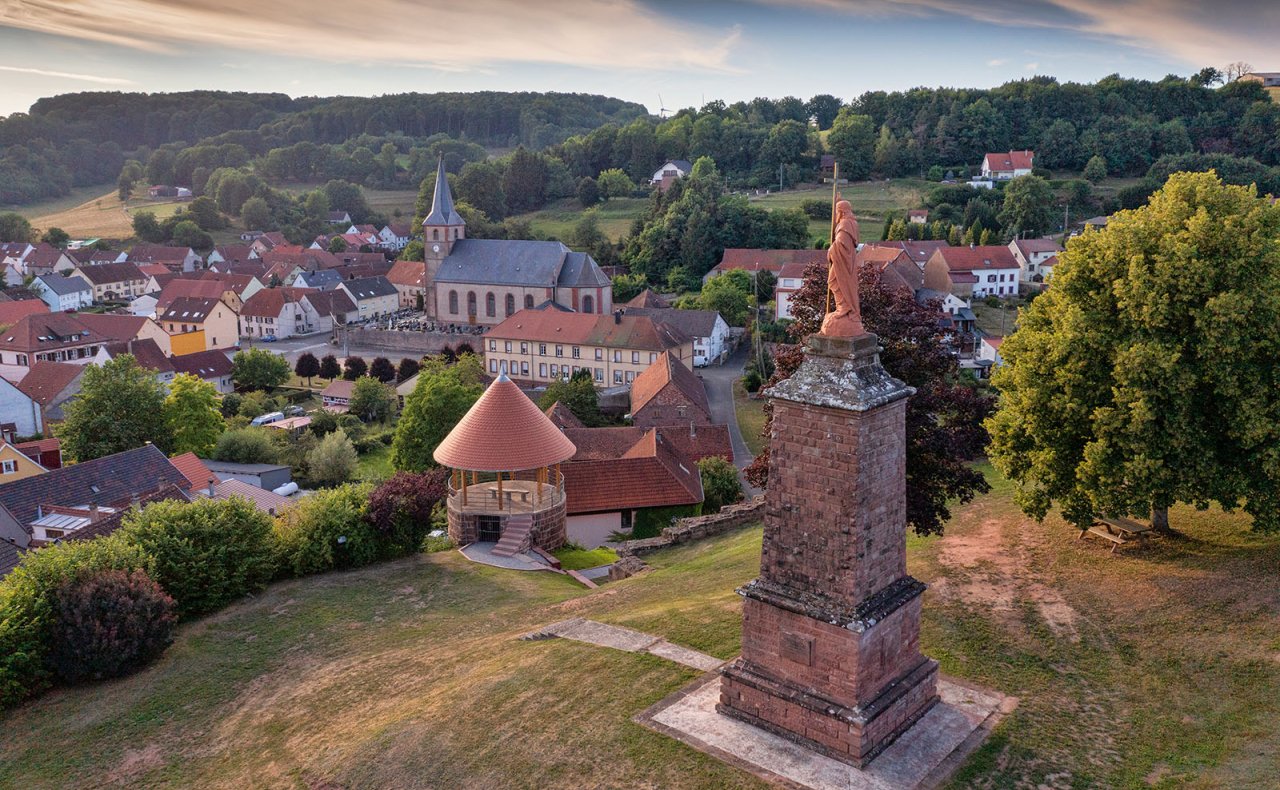
The micro-adventure: the GR53
Fancy extending your stay? The GR53 crosses a large part of the Northern Vosges over several days – perfect for a walking holiday. Served by several railway stations between Wissembourg and Niederbronn-les-Bains or between Niederbronn-les-Bains and Saverne, it links forests, sandstone cliffs and several of the mountain range’s most beautiful fortified castles.
The weekend idea: 2 to 3 days’ walking to discover the Northern Vosges in a different way.
-
From10,00 €
Hiking to discover the Lake Der region
-
From10,00 €
10€ gift card from Inspire Metz – Tourist Office
-
From54,00 €
Micro-adventure “Rando à l’assaut des Châteaux” departing from Colmar with Kut’Zig
-
From11,00 €
Stroll through the traditional and legendary Christmas tales of Kaysersberg
-
From80,00 €
L’Immersion Gourmande – Stroll, Visit & Gastronomy
-
From10,00 €
Guided tour: Art Nouveau and Art Deco at Parc de Saurupt
-
From5,00 €
Guided tour: “Troyes La Magnifique” stroll
-
From4,00 €
Guided tour of the Grébier ravine, an exceptional railway engineering structure
-
From39,00 €
Christmas Market Tracking Game Christmas Tour in Mulhouse
-
From49,00 €
A rejuvenating walk in the heart of the Vosges Forest
-
From39,00 €
Christmas market scavenger hunt in Reims
-
From39,00 €
Christmas market treasure hunt in Metz
-
From20,00 €
Forest bath to the sound of water
-
From10,00 €
Hiking to discover the mushrooms of Lac du Der
-
From15,00 €
Let’s take a walk in the woods… Forest, orchards and rural heritage.


Best practice – let’s adopt the right habits
These castles have stood the test of time; it is up to us to look after them. When out walking, stay on the marked paths, respect protected areas and take your rubbish away with you.
In the ruins, take particular care near staircases, ramparts and cliffs. Some rock formations are also home to vulnerable wildlife, notably the peregrine falcon. Where access restrictions are in place, they help to preserve this exceptional environment. Finally, as in all woodland areas, fires are strictly prohibited.
Read more
-
Travel diary : As a couple, Culture & Heritage, Knowhow
2 days in the Vosges: discovering our glassmaking heritage
Read more -
 Top : Adventure, As a couple, As a family, Gastronomy, Mountains, Nature, Responsible travel, Summer
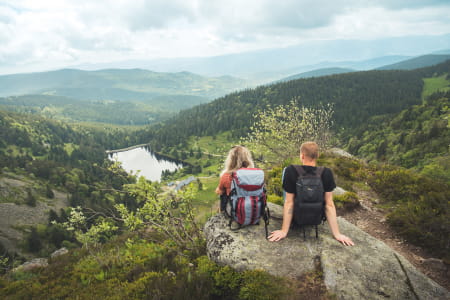
Combine hiking and farmhouse inns in Eastern France!
Read more -
 Large format : As a couple, Mountains, Nature
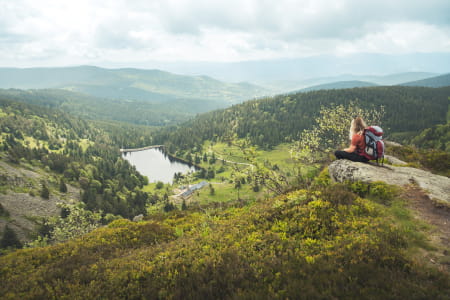
The Tour des 4 Lacs: an oxygen-pumping hike in the Vosges!
Read more -
 :
3-day summer hike on the north of the GR5
Read more -
 Large format : As a couple, Campagne, Culture & Heritage, EstSideStory, Nature, Out-of-the-ordinary
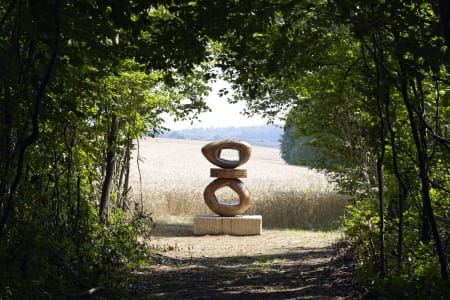
The Grand Est region with a difference: where art meets nature
Read more