
Large format :
Culture & Heritage
The Wall of Names in Schirmeck: 44,000 lives that tell the story of Alsace and the Moselle
In Schirmeck, Alsace, a new memorial gives a face and a story to nearly 44,000 people from Alsace and Moselle who died as a result of the Second World War. Situated as an extension of the Alsace-Moselle Memorial, the Wall of Names is a unique monument – at once understated, digital and deeply human. A place to remember, but above all to understand.

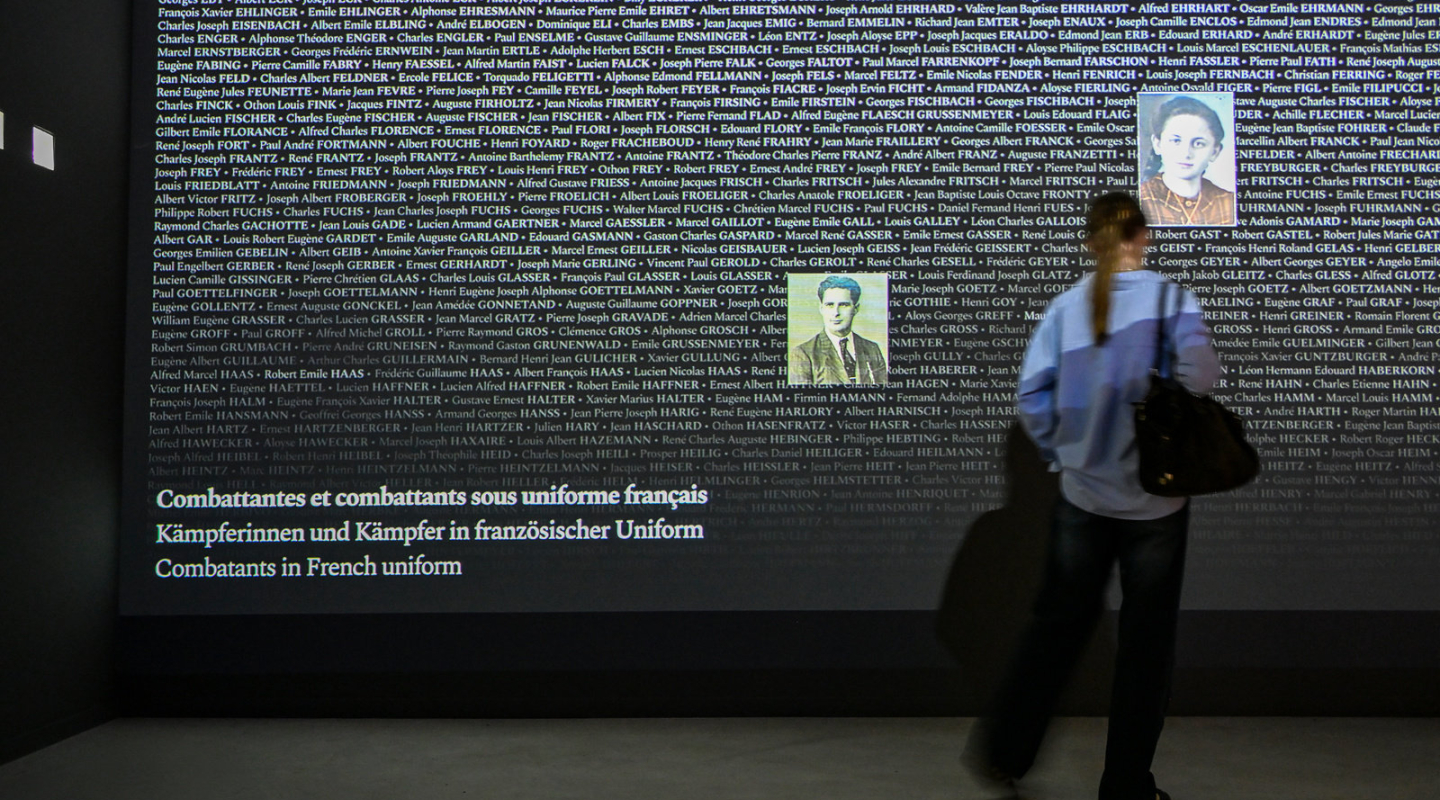
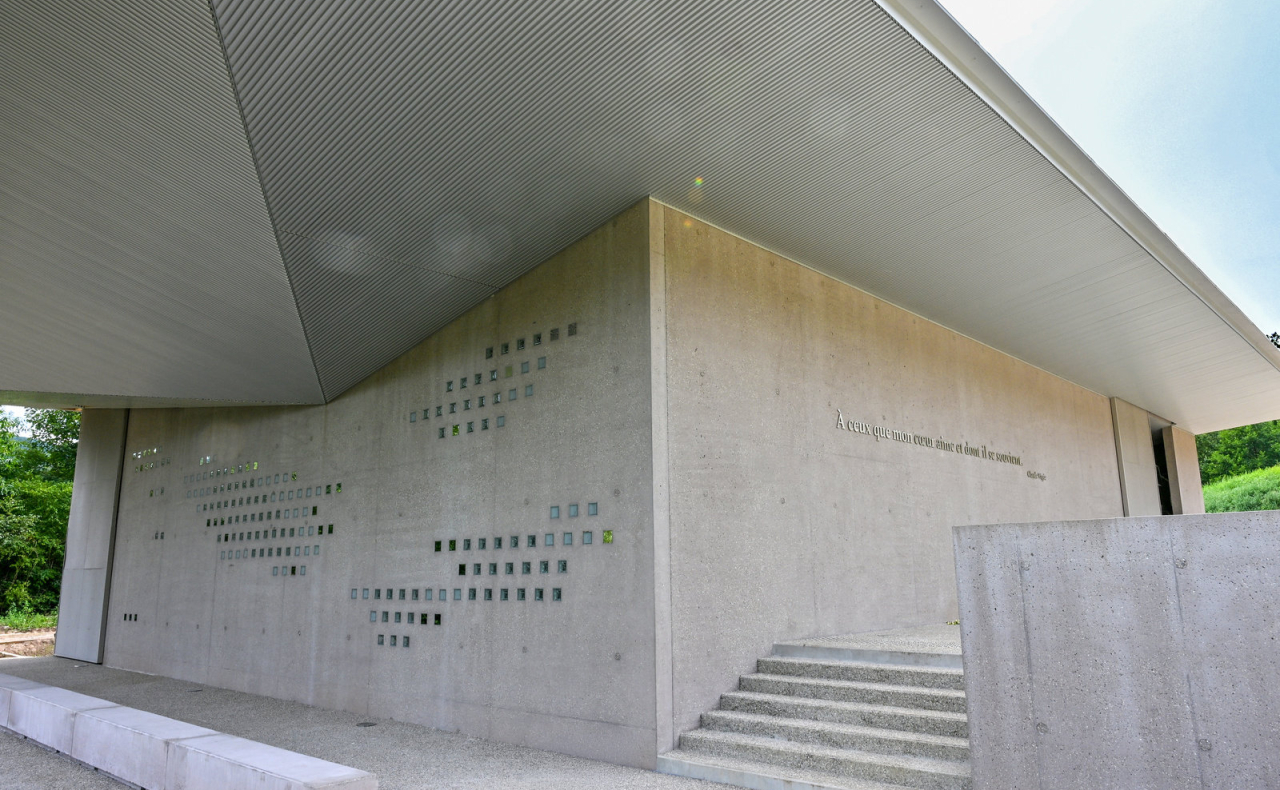
First of all, there is this sentence, inscribed on the monument: ‘To those whom my heart loves and remembers.’ A few words by the Alsatian poet Claude Vigée which perhaps express better than any long speech what we have come here to find.
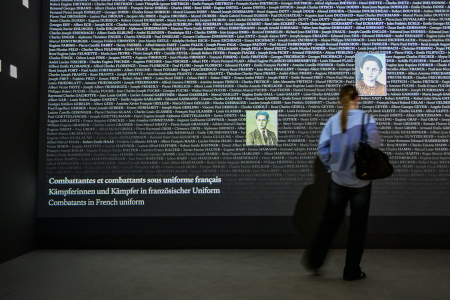
Then there are the names. They appear by the thousands on the dark walls. Nearly 44,000 names of men, women and children from Alsace and Moselle who died as a result of the Second World War.
A Wall of Names to understand the unique history of Alsace and Moselle
To understand this place, we must go back to 1940. Following the invasion by German troops, Alsace and Moselle faced a different fate from the rest of France: they were effectively annexed by Nazi Germany. This marked the beginning of more than four years of totalitarian rule, Nazification and repression. In August 1942, compulsory military service was imposed. 130,000 people from Alsace and Moselle were forcibly conscripted into the German army and sent into battle. Nearly 30,000 of them died.
But the story told in Schirmeck is even broader. For the war claimed not only those forcibly conscripted, but also soldiers fighting in French uniform, members of the Resistance, civilian victims and people persecuted by the Nazi regime: Jews, Travellers and ‘Gypsies’, Jehovah’s Witnesses, psychiatric patients, homosexuals…
The Wall of Names brings these memories together without conflating their profoundly different life stories.
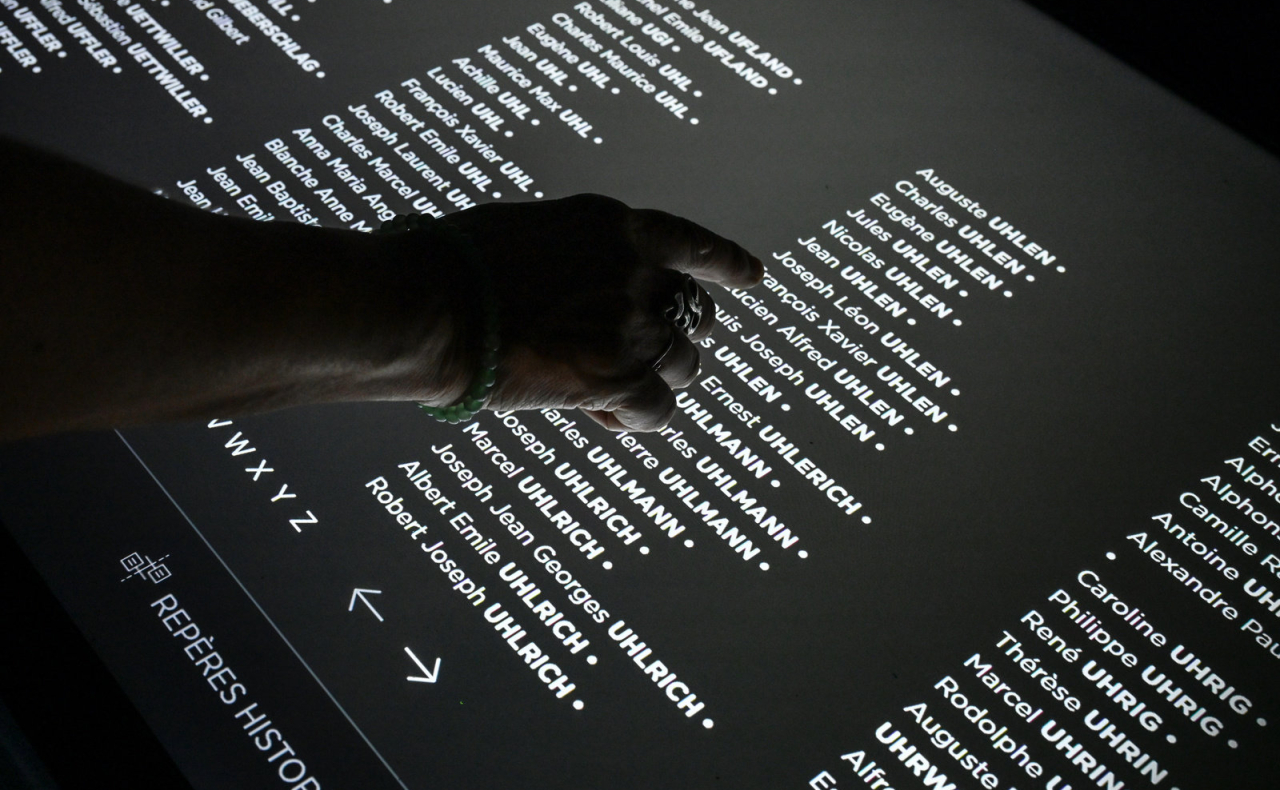
Behind the 44,000 names lie women, men and children
This is probably what strikes you most when you first see the monument. 44,000 is a number you can read. It is much harder to visualise. So the Wall does exactly the opposite: it starts with the individual to tell the story of history.
Among these names is thatof Albert Moszkowicz, who arrived in Metz with his family after fleeing anti-Semitism in Poland. He joined the Foreign Legion in 1940 and subsequently tried to protect his family. He was arrested, deported to Auschwitz-Birkenau, and shot there in 1943.
Then there is Rodolphe Stoldick, a young man from Metz described by his sister as gentle and sensitive. Forcibly conscripted into the Wehrmacht, he died aged 23 on the Eastern Front.
Then there is Paul Steinmetz, aged 15. In December 1944, whilst his family had taken refuge in the cellars of a convent during the Battle of Alsace, the teenager went out to milk the cows. He was killed by shrapnel.
Three names amongst thousands. Three lives that are enough, in themselves, to change the way we view a mere statistic.
In Schirmeck, a digital memorial to preserve the memory
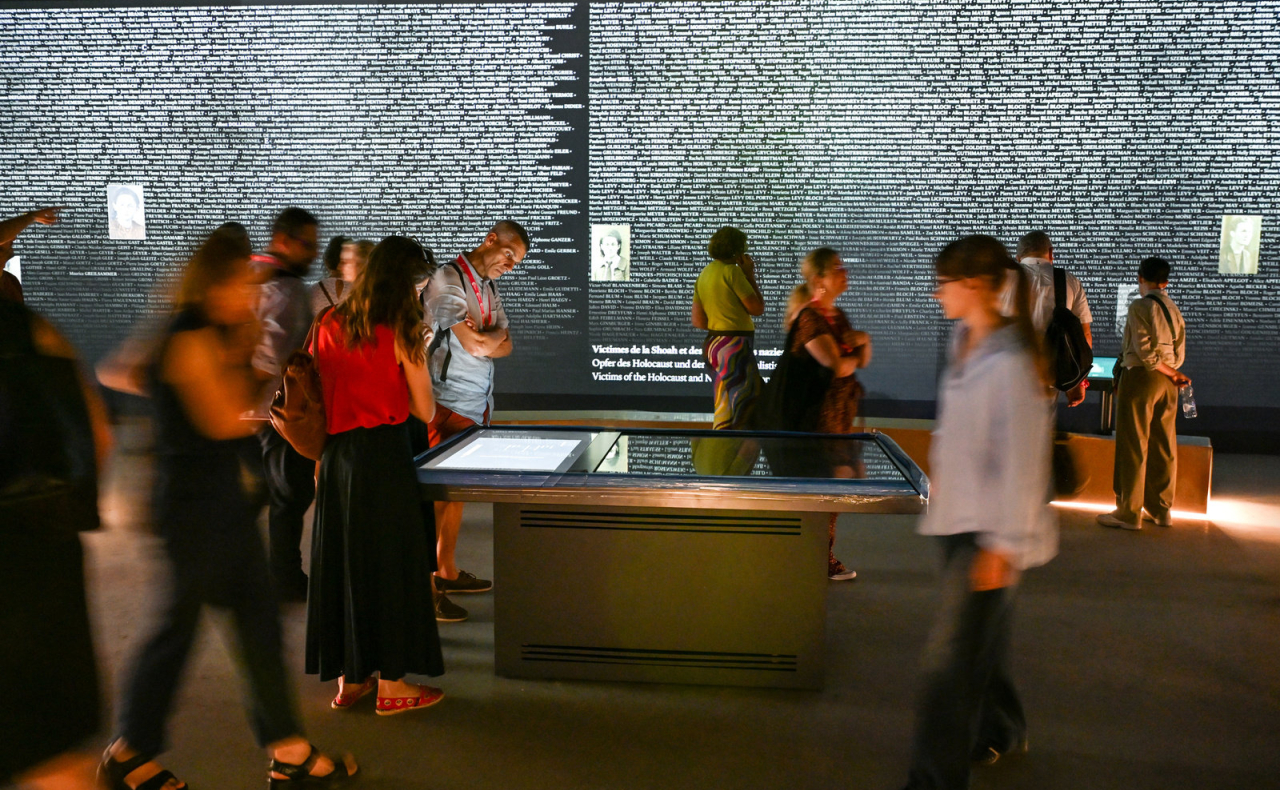
Another distinctive feature of the Wall of Names is that the names are not permanently engraved in stone. Instead, they are projected onto dark walls and scroll slowly across them. Interactive displays allow visitors to search for a specific person, discover their life story and place it within the broader context of the war.
Around a hundred biographies, written by Second World War specialists, accompany the visitor’s journey. Photographs, documents and archive material gradually put a face to the names one has just read.
This choice of digital technology is not merely for display purposes. It enables the Wall to remain a living monument. The database now contains over 44,000 individual records, documented using scholarly sources and archival material. But it continues to grow thanks to research by historians and documents that are sometimes still preserved within families.
A photograph found in a drawer, a letter, an administrative document or a story passed down from generation to generation can still help to complete a story.
A place of remembrance to be discovered with the younger generations
The Wall of Names is therefore not intended solely for those whose family history is linked to Alsace or the Moselle. It has also been designed as a place for passing on history.
Educational workshops, meetings with descendants, the collection of family archives and projects carried out with remembrance organisations make it possible to explore this history with younger people. Digital content is available in French, German and English, with a version tailored for young audiences, recommended for children aged 8 and over.
A different way of approaching the Second World War: no longer just through dates and major events, but from the perspective of the women, men and children who lived through it.
-
From14,00 €
Combined ticket for Fort de Vaux and Douaumont
-
From10,00 €
Guided tour of the La Ferté work
-
From6,50 €
Visit to the Fort de Vaux
-
From5,00 €
Visit to the Chattancourt Trench
-
From11,00 €
Mémorial de Dormans 1914-1918 – Private tour
-
From15,00 €
Visit to Fermont Fort & the 1940 Combatant Museum
-
From12,00 €
Visit to the Fort de Mutzig
-
From4,00 €
Family game trail in Charlemont
-
From6,00 €
Self-guided tour of the Musée du Combattant de 1940
-
Free
Guided tour – The liberation of Troyes
-
From15,00 €
Guided tour of the Bois des Caures by car
-
From18,00 €
Cruise on the Meuse River aboard the Charlemagne boat
-
From6,00 €
Guided tour Treasures of our land: The fortified forest of Villey-Saint-Étienne
-
From5,00 €
Vincey Military Art Museum
-
From5,00 €
Free visit to the Charlemont Fortress


From the Alsace-Moselle Memorial to the Wall of Names: two visits that complement each other
The location of the Wall of Names is by no means coincidental.
It stands at the foot of the Alsace-Moselle Memorial, to which it is linked by a landscaped path. The two sites complement one another: the Memorial helps visitors understand the unique history of Alsace and Moselle, which were tossed between France and Germany from 1870 until the post-war period; the Wall of Names brings this collective history back to individual destinies.
A few kilometres away lies the site of the former Natzweiler-Struthof concentration camp. Schirmeck is thus situated at the heart of a region where several sites offer different perspectives on the history of the Second World War.
A visit that can be emotionally demanding, but which also offers a great deal of insight.
Read more
-
 Travel diary : In town
Visit Metz in 2 days: a creative and modern escape on arrival!
Read more -
 Travel diary : Among friends, As a couple, Autumn, Mountains, Nature, Wellbeing, Winter
Weekend in the Grand Est: activate slow mode!
Read more -
 :
UNESCO: travel back in time at listed sites in Grand Est
Read more -
 Travel diary : As a couple, Culture & Heritage, In town
2 days in Strasbourg: stay in the capital of Alsace
Read more -
Travel diary : As a couple, Culture & Heritage, Knowhow
2 days in the Vosges: discovering our glassmaking heritage
Read more -
 Large format : Culture & Heritage
In the footsteps of General de Gaulle
Read more