


Dans le vignoble
Rechercher un lieu, une activité...
Journey back in time, to the heart of memories
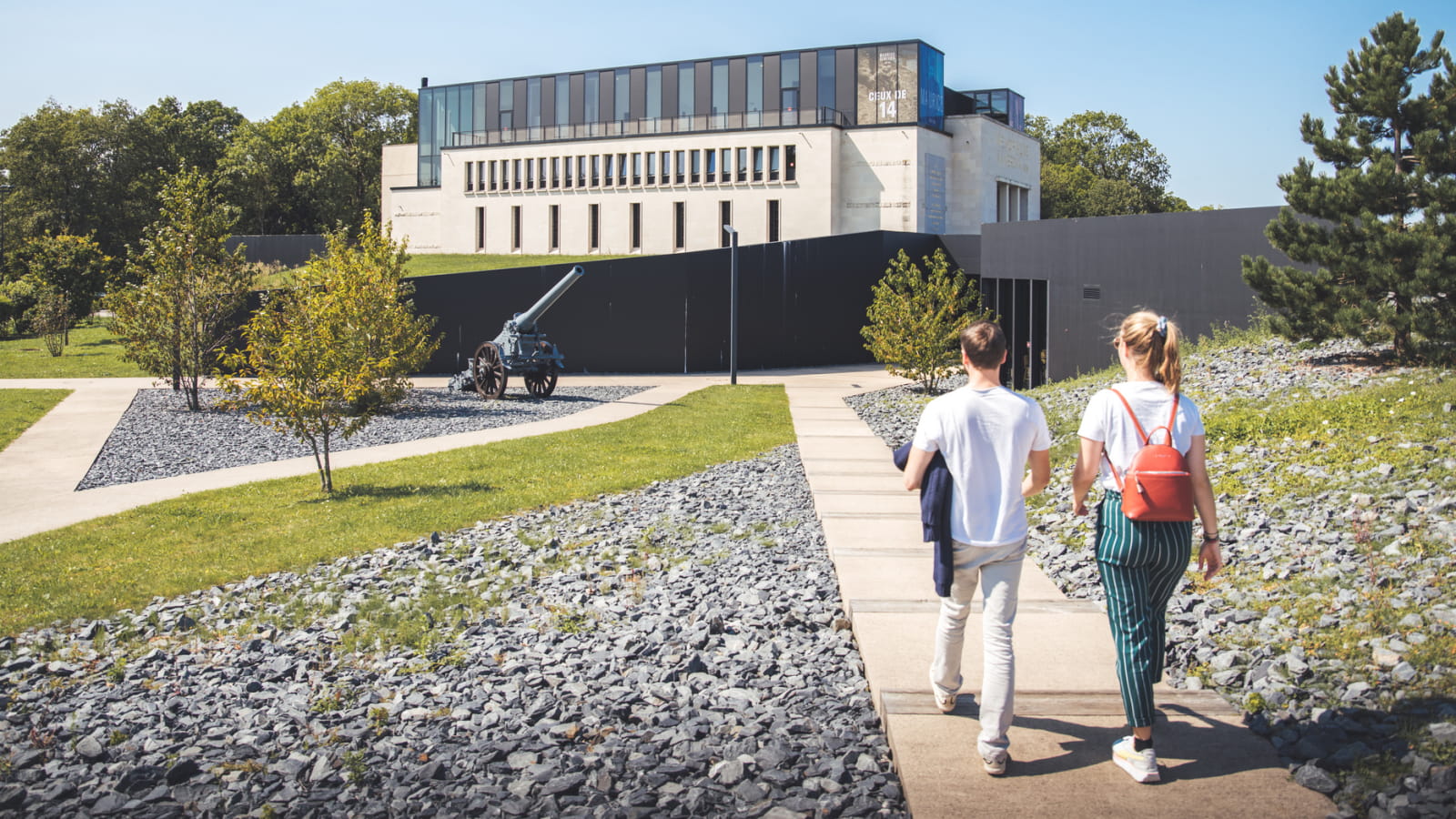
The Grand Est is an open-air history book! Marked by decades of conflict that have shaped the landscape and left their mark on people's minds, the region is home to a perfectly preserved historical and memorial heritage. From Verdun to the Charles de Gaulle Memorial, walk in the footsteps of the past.

The Grand Est, a land of remembrance
Because of its geographical position on the border, the Grand Est was the scene of 3 major conflicts. Numerous places of remembrance open their doors to you for a unique journey to the heart of History.
Take the time to discover them through the voices of passionate guides, by bus or on your own, at your own pace. If you're staying in the region as a family, opt for a fun activity (outdoor treasure hunt, obstacle course, etc.) to capture your children's attention!

-
From10,00 €
Guided tour of the La Ferté work
-
From8,00 €
Guided tour: Raon l’étape, between nature and historical heritage
-
From5,00 €
Visit to the A5 Bois du Four Maginot Line at Villers-la-Montagne
-
Trip ideas From365,00 €
Experience the know-how of the city of Longwy
-
From5,00 €
Vincey Military Art Museum
-
From7,00 €
Guided tour in the footsteps of Castel Mycélium
-
Free
Guided tour – The liberation of Troyes
-
From29,00 €
Guided bus tour of the Verdun battlefield
-
From5,00 €
Animation “1944, a free Christmas at last!”
-
From3,00 €
À la conquête de Brienne-le-Château – Audio tour


Visit the emblematic sites of the 1870 war
The War of 1870 marked a major turning point in the region's history, as Moselle andAlsace were annexed to Germany after 1870.
To better understand this conflict, visit Gravelotte, near Metz, where the Museum of the 1870 War and Annexation is located. The only one of its kind in Europe, this museum is entirely devoted to the history of the 1870 war and the annexation of Alsace and part of Lorraine to the German Empire (1871-1918). Dive into the heart of the fighting and discover what life was like during the annexation, thanks to some exceptional collections!
If you're looking for a cross-disciplinary site that doesn't stop at 1870, the Alsace-Moselle Memorial is for you. Located in Schirmeck, in the Vosges, this museum recounts the tumultuous history of Alsace and Moselle, from 1870 to the construction of Europe.

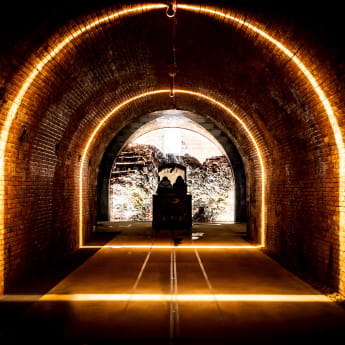
Destination Verdun, a symbolic place of remembrance of the First World War
Sadly famous, Verdun is an essential place of remembrance of the First World War.
Situated high above the town, the Verdun Battlefield bears the scars of the violent fighting that pitted the French against the Germans in 1916. At the heart of this symbolic open-air site, now a Forest of Remembrance classified as a Forêt d'Exception®, 3 remarkable sites offer a better understanding of history:the Verdun Memorial, the Vaux and Douaumont forts, and the Douaumont Ossuary. As for the necropolis, it houses the memory of the French and German soldiers who died in the 1916 battle. If you can, climb the steps of the ossuary tower for a 360° panoramic view of the entire battlefield.
In Verdun town centre, the Citadelle souterraine de Verdun offers a unique immersive experience. Thanks to augmented reality, you can slip into the shoes of a soldier from the Great War. The site also hosted the ceremony for the naming of the Unknown Soldier, who lies beneath the Arc de Triomphe.
-
From7,00 €
Guided tour in the footsteps of Castel Mycélium
-
From29,00 €
Guided bus tour of the Verdun battlefield
-
From6,50 €
Visit to the Fort de Vaux
-
From15,00 €
Guided tour of the Bois des Caures by car
-
From17,00 €
Verdun Battlefield – Combined Ticket: Verdun Memorial & 2 Forts
-
From9,00 €
Visit to the Verdun Memorial
-
From10,00 €
Guided tour of Bezonvaux, a battered village (1914-1940)
-
From5,00 €
Bois Fumin hike
-
From5,00 €
Visit to the Chattancourt Trench
-
From6,00 €
Douaumont fort visit
-
From19,00 €
Combined ticket Mémorial de Verdun & Fort de Douaumont
-
From15,00 €
History and nature outing to Crête des Eparges, the post-war forest!
-
From10,00 €
Guided tour of the Champ de Bataille and hike – Circuit Souville
-
From13,00 €
Visit the underground Citadelle of Verdun

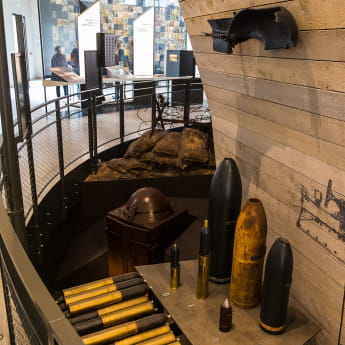
Explore other places of remembrance dedicated to the Great War (1914-1918)
From the Moselle to Alsace, via Champagne, the Grand Est region has a wealth of historic sites dedicated to the Great War.
In Lorraine, the Butte de Montsec commemorates the reduction of the Saint-Mihiel salient by the American army. Situated in the heart of the countryside, the site is well worth a visit for the magnificent view it affords over Lac de Madine and the Meuse coastline. The Vosges was not spared by the conflicts either, as the Linge Memorial and Hartmannswillerkopf prove.
In Champagne, the Mémorial des batailles de la Marne 1914-1918 at Dormans commemorates the soldiers who died in the bloody battle of 1918. Designed as a bulwark against oblivion, this grandiose place of remembrance solemnly overlooks the Marne Valley and the surrounding vineyards.
More unusual is Fort Mutzig, in Alsace, part of a huge system of fortifications built by Germany between the wars. Take a fascinating historical tour and go behind the scenes of this extraordinary fortification!

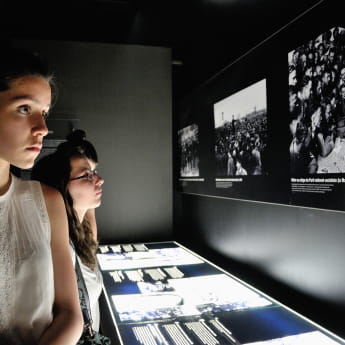
Visit the memorial sites dedicated to the Second World War
By visiting the places of remembrance of the Second World War, you are embarking on a real journey through the history of the 20ᵉ century.
At Colombey-Les-Deux-Eglises, in Champagne, walk in the footsteps of General de Gaulle: the former family home and the memorial erected in his memory retrace the career of this war hero.
In Alsace, the Natzweiler-Struthof concentration camp memorial, the former Nazi concentration camp at Natzweiler, is the only one of its kind in France. It was designed as a memorial to the heroes and martyrs of the deportation.
The region also boasts a number of remarkable remains of fortifications. Several Maginot Line works are open to the public, including the Simserhof, Hackenberg and Michelsberg works in Moselle, and the Four-à-Chaux and Schoenenbourg forts in Alsace.


Remembrance and meditation in the military cemeteries of Eastern France
The Grand Est region has many military cemeteries dedicated to the two world wars. Saint-Mihiel, Saint-Avold and Epinal are home to the graves of fallen soldiers.
If you're passing nearby, make a stop at the Romagne sous Montfaucon American cemetery, the largest in Europe, where 14,246 American soldiers are buried.

Attacking the fortifications
Numerous fortifications inherited or modified by Vauban and Seré-de-Rivières stand out as essential witnesses to history. On the edge of the Ardennes, the Charlemont citadel overlooks the Meuse valley.
Other UNESCO-listed sites, such as the Vauban ramparts at Longwy and the fortified town of Neuf-Brisach in Alsace, boast remarkable architecture!

Looking for inspiration?
-
 :
:UNESCO: travel back in time at listed sites in Grand Est
Read more -
 Spotlight : Culture & Heritage, Events, In town
Mulhouse celebrates 800 years of history
Read more -
 Travel diary : In town
Visit Metz in 2 days: a creative and modern escape on arrival!
Read more -
 :
:3-day summer hike on the north of the GR5
Read more
 My Explore